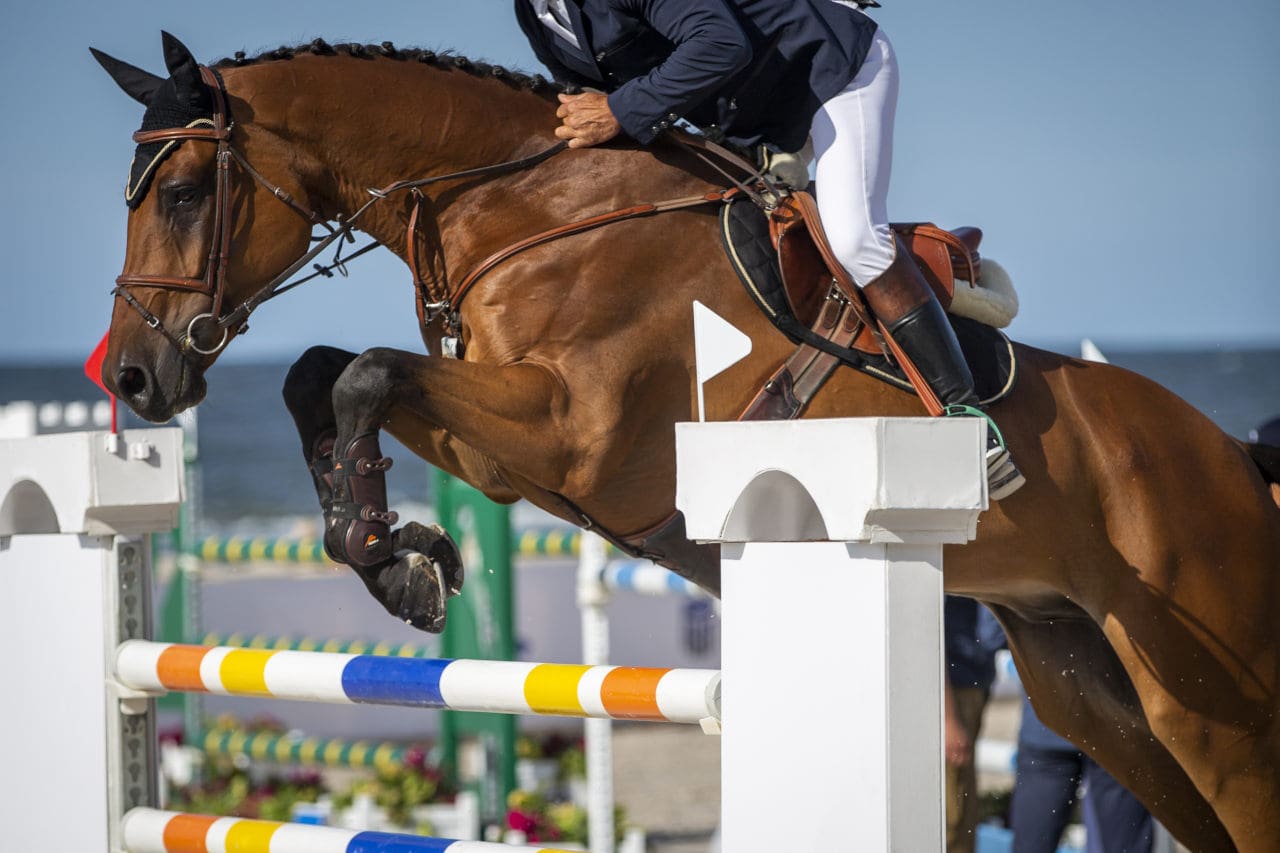
High-level show jumpers are particularly prone to chronic lower back pain due to repetitive strain, impact upon landing jumps, and awkward riding positions. While factors such as the rider’s physical condition and equipment fit are well known, one element that is less often explored is the jumping style of the lead horse.
Indeed, some horses develop characteristics of jumping that directly influence their posture and stability. a9> directly influence the posture and stability of the rider:
A very dynamic impulse during the call can cause intense a8> intense vertical thrusts.
An unbalanced or irregular suspension phase forces the rider to compensate in order to remain centred.
A reception that is abrupt or asymmetrical transmits repeated impacts in the area of a7> repeated shocks in the lumbar region.
These constraints, repeated during training and competition, can lead to muscle fatigue, postural compensations, and even persistent joint dysfunction.
In this context, animal etiopathy is a valuable tool, both in prevention and treatment.
On the horse, the animal etiopath intervenes to restore mobility to the joints, correct any spinal or pelvic restrictions, and improve the fluidity of the jumping movement. This contributes to better consistency, a more flexible landing and a reduction in imbalances.
On the rider (via the intervention of a human etiopath), the approach aims to identify and treat the mechanical causes of pain: vertebral blockages, compensations related to the horse’s imbalances or repeated impacts, disturbances in posture or lumbar mobility.
Combined with targeted training (core strengthening, flexibility work), a well-fitting saddle and regular technical monitoring, human and animal etiopathy can address the root cause of pain and optimise the synergy between rider and horse.
It is part of a comprehensive approach to sustainable performance, preserving both the health of the rider and the quality of the horse.