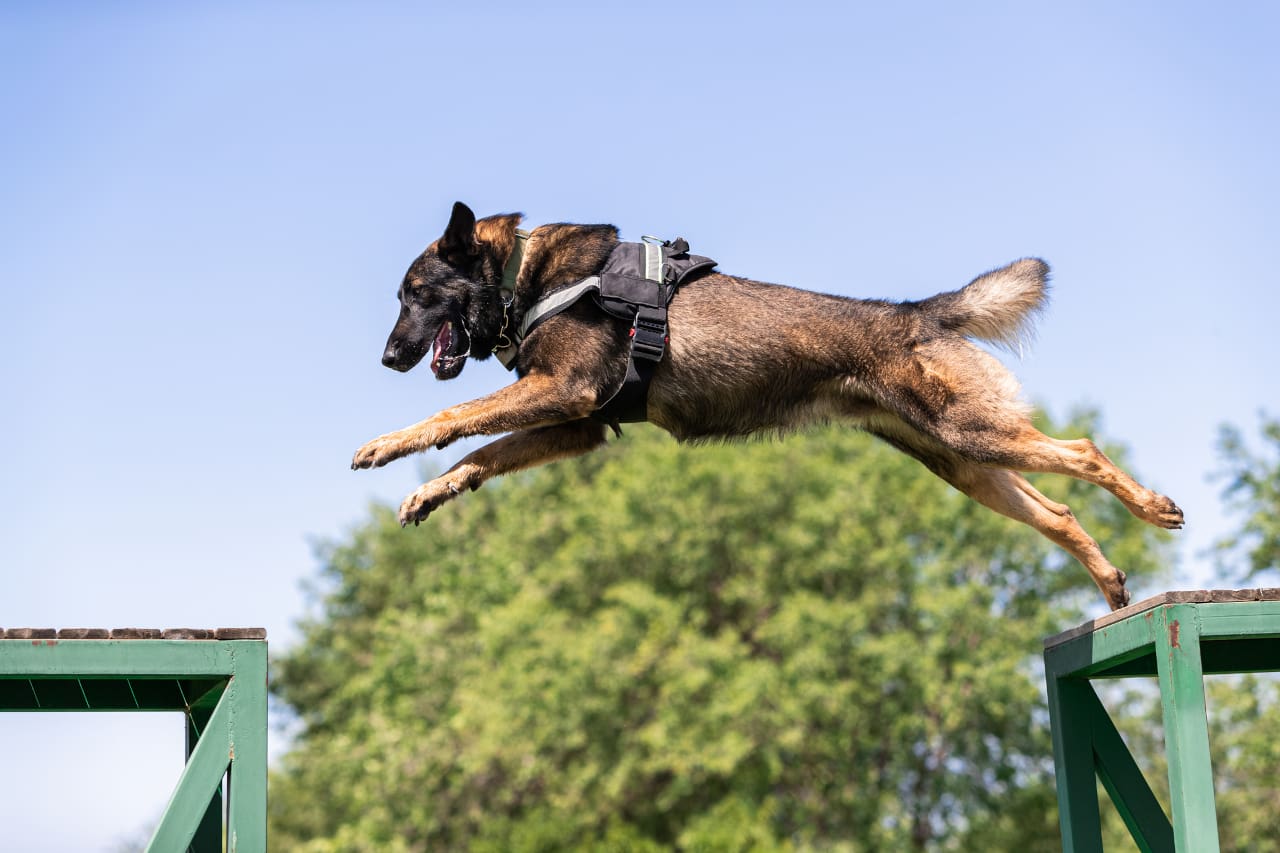
Whether they are police dogs, detection dogs, rescue dogs, assistance dogs or sporting dogs, working dogs are intensely demanding on their bodies and their minds. Endurance, responsiveness, concentration, stress resistance: their performance relies on a delicate balance between physical condition and optimal physiological functioning. It is precisely in this search for harmony that a5> animal etiopathy finds its full relevance: a approach manual, not medicinal, centred on the functional cause ofrather than on their individual symptoms.
Understanding animal etiopathy
Animal etiopathy is based on a logical analysis of how the body functions.
The practitioner, trained in the mechanics and physiology of living organisms, seeks to identify the origin of a dysfunction in order to a9> correct it by using precise and painless technical manoeuvres.
For dogs, this comprehensive approach helps restore mobility and communication between the systems responsible for performance and recovery.
Performance and prevention: an inseparable duo
Working dogs repeat demanding movements: jumping, pulling, running fast, holding positions for long periods of time, carrying harnesses, etc.
These constraints often result in :
- Muscle tension recurring (back, pelvis, shoulders);
- Functional locomotor disorders (lameness, postural imbalances);
- Digestive problems associated with stress or intense physical exertion;
- A decrease in concentration or in reactivity.
Etiopathy acts upstream, detecting imbalances before they become limiting.
A preventative regular session helps the dog to:
- Preserve mobility of the joints, which is essential for flexibility and speed;
- Optimise recovery after exercise or missions;
- Improve proprioception and motor coordination;
- Reduce nervous fatigue and stress.
Case studies: when etiopathy supports the mission:
A mountain rescue dog: prone to lumbar strain after several rescues. Après deux séances d’étiopathie, récupération plus rapide et meilleure amplitude de mouvement.
Un chien d’agility : perte de vitesse en virage. Correction of sacroiliac restriction → improved performance, times back to competitive levels.
A complementary and reasoned approach
Animal etiopathy is not a substitute for veterinary medicine, but rather a complementary approach.
Whereas veterinarians treat pathologies, etiopaths focus on understanding and correcting the functional causes of certain non-lesional disorders.
This collaboration enables the extension of the career of the dog, to reduce the risk of injury and to support its overall wellbeing.
Conclusion: the body at the service of the mission
Working dogs are athletes in the service of humans.
Animal etiopathy, with its causal and respectful approach, offers a natural method for optimising physical and mental abilities while respecting the animal’s integrity.
It is a combination of performance and wellbeing, at the very heart of the values upheld by I2ea!