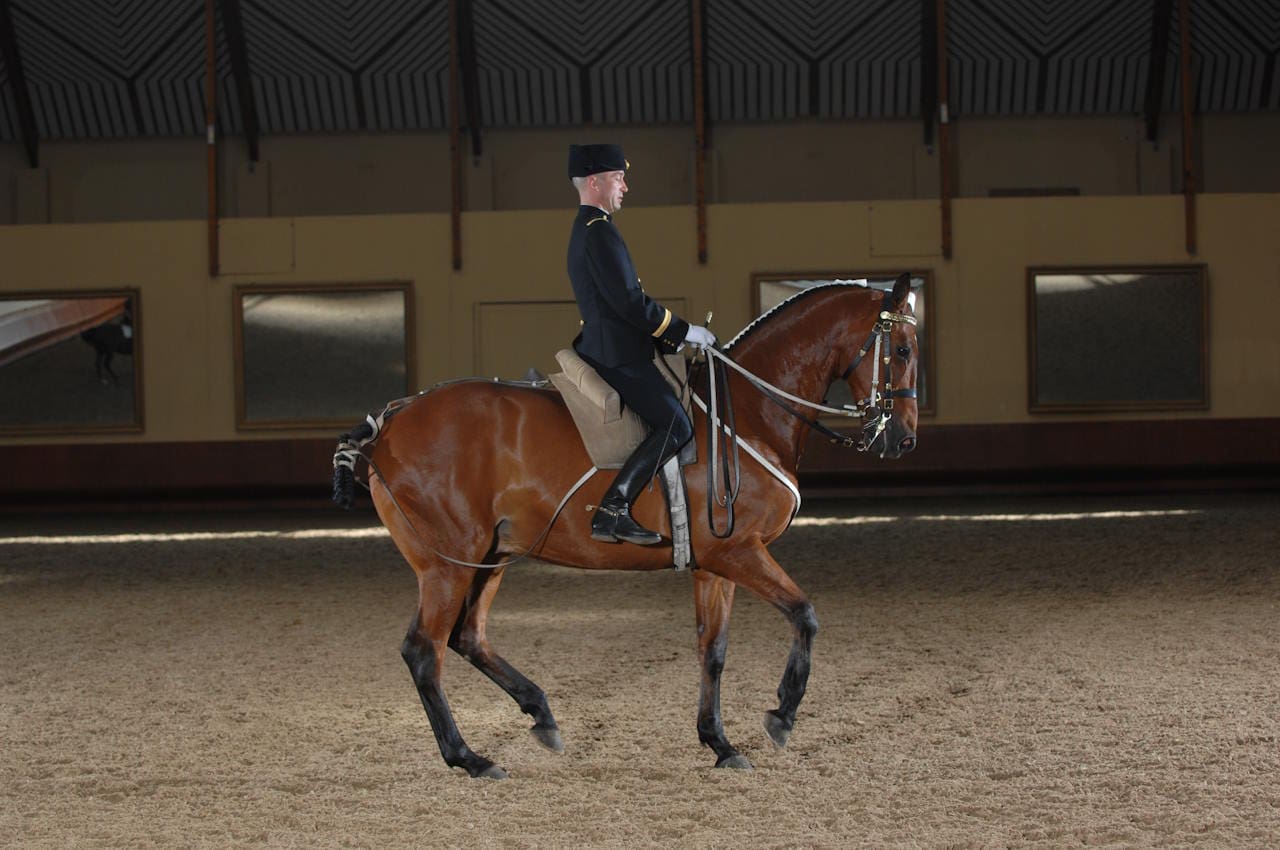
The piaffe, a high school movement characterised by trotting on the spot, requires the horse to engage its hindquarters deeply, with remarkable suppleness and optimal balance. Animal etiopathy, a manual discipline that aims to correct mechanical dysfunctions of the body, proves to be a valuable ally in improving this demanding figure.
By identifying joint, muscle or tissue restrictions, the animal etiopath can restore the horse’s mobility, particularly in the pelvis, lower back and shoulders, which are key areas for a fluid and rhythmic piaffe. Even a slight loss of mobility can affect symmetry, rhythm or limb elevation, compromising the quality of movement.
Thanks to precise, non-invasive techniques, etiopathy can also relieve deep pain that is often undetectable to the naked eye. The horse then regains full joint mobility and improved proprioception, promoting a more natural and relaxed gait.
The psychological impact is just as important: a horse freed from physical tension gains mental alertness and confidence, and responds more willingly to the rider’s commands. Thus, etiopathy does not merely correct a dysfunction, it optimises the potential of the athletic horse.
In addition to training and veterinary care, it offers a preventive and curative approach. Many dressage riders now report significant progress after just a few sessions, both in terms of consistency and flexibility in the piaffer.
In summary, animal etiopathy is an effective manual therapy for improving piaffe by acting on the biomechanics, comfort and performance of the horse.