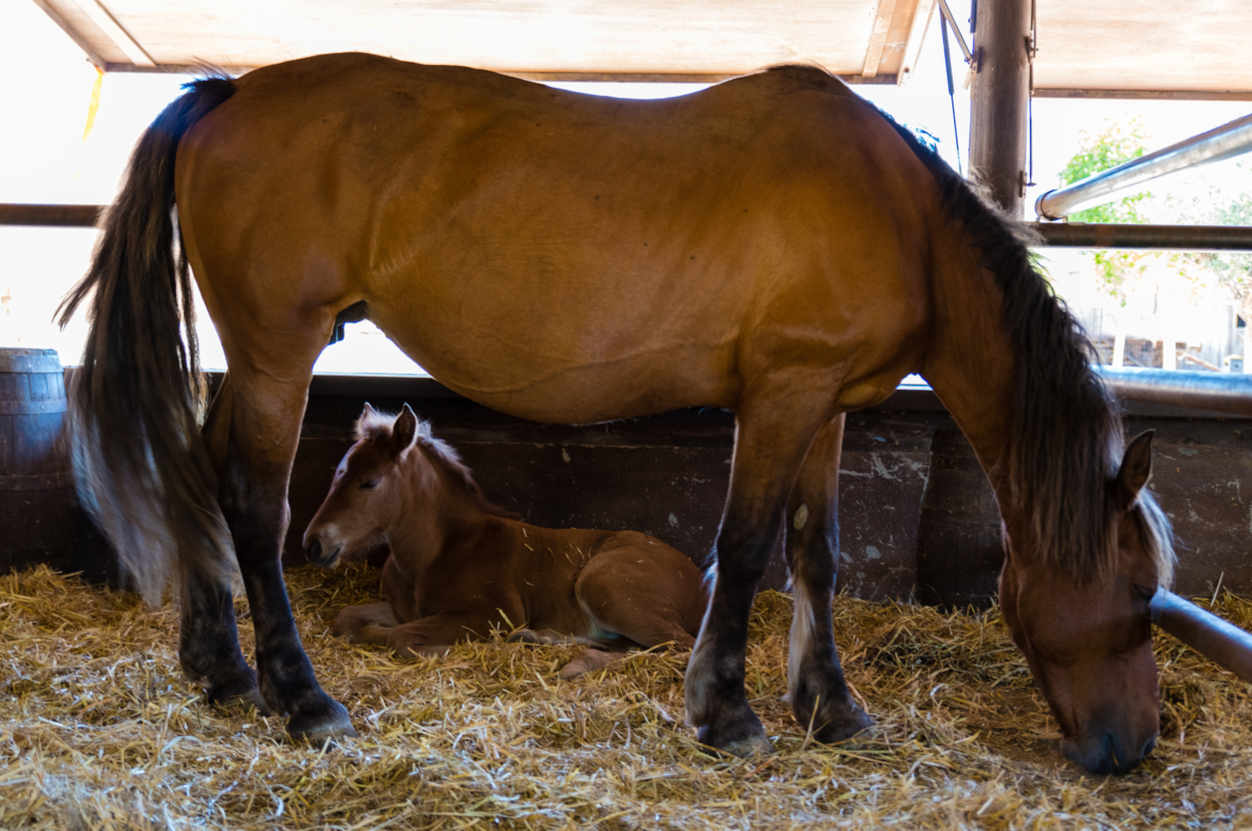
The postpartum period is a critical phase in the biomechanics of mares. The expulsion of the foal and the anatomical adaptations following gestation frequently cause pelvic imbalances which, without appropriate intervention, are compensated for by predictable mechanical chains. The etiopathic approach provides a structured framework for analysing these reversible lesions and restoring bodily balance through targeted technical procedures.
Postpartum biomechanics and pelvic lesions
Childbirth causes significant changes to the pelvic architecture. The ligament relaxation induced by relaxin, combined with the mechanical stresses of childbirth, promotes abnormal mobility of the sacroiliac and coccygeal joints. These structural disturbances constitute primary lesions in the etiopathic sense, i.e., reversible biomechanical alterations that compromise tissue homeostasis.
Equine anatomy reveals that the pelvis functions as a biomechanical crossroads between the spine and the hind limbs. When the sacroiliac joints lose their optimal alignment, they generate abnormal mechanical stresses on the lumbar fascia and adjacent muscle chains. These initial imbalances often remain silent during the first few days, masked by the natural postpartum inflammatory processes, but already set the stage for future compensations.
Etiopathy rigorously distinguishes between reversible and irreversible lesions. In the postpartum context, abnormal joint mobility and fascial restrictions fall into the first category, provided that no structural degeneration has set in. The etiopathic clinical examination aims precisely to identify these reversible lesions before they organise themselves into fixed compensatory chains.
Mechanisms of compensatory chains
When faced with a primary pelvic lesion, the equine organism implements compensatory strategies to maintain locomotion and reduce painful constraints. These compensations follow predictable mechanical pathways that etiopathy conceptualises in the form of chains. Postpartum mares typically present with unilateral sacroiliac compression, which induces pelvic tilt, leading to retraction of the ipsilateral lumbar fascia.
This restriction then spreads cranially to the thoracic vertebrae and diaphragmatic fascia, altering respiratory mechanics and withers posture. Simultaneously, the chain continues distally: pelvic asymmetry imposes mechanical overload on the coxofemoral joint and the corresponding hind limb, frequently observable by a difference in weight bearing or asymmetrical wear of the feet.
The etiopathic approach identifies these phenomena as secondary lesions, direct mechanical consequences of the primary pelvic lesion. They represent the body’s temporary adaptation to preserve locomotor function, but ultimately lead to circulatory imbalances and tissue irritation. The etiopathic approach consists of treating the primary cause to allow the secondary compensations to resolve spontaneously, in accordance with the principle of self-healing specific to this discipline.
Intervention using technical procedures and optimisation of well-being
Etiopathic intervention in postpartum mares is based on precise technical procedures aimed at restoring the physiological mobility of the pelvic joints and releasing fascial restrictions. Unlike symptomatic approaches, these techniques are applied exclusively to reversible lesions identified during clinical examination, respecting the chronology of compensations.
The protocol begins with a careful assessment of sacroiliac mobility and pelvic alignment. The technical procedures then aim to normalise the physico-chemical phenomena in the tissues that have been altered by abnormal mechanical stresses. By restoring the structural balance of the pelvis, the body is able to spontaneously reabsorb the compensatory tensions in the lumbar chains and hind limbs.
This approach prioritises the overall well-being of the mare by optimising her biomechanics without invasive intervention. The frequency of interventions depends on the natural postpartum evolution and individual responsiveness. Ideally, an initial assessment is carried out within two weeks of foaling, a period when the tissues still retain favourable plasticity.
Well-being is monitored by assessing improvements in posture at rest, symmetry of support and quality of movement at work. The aim is to prevent the chronicity of imbalances that could affect future fertility or athletic performance. By acting on fundamental biomechanical mechanisms, the etiopathic approach guides the mare towards optimal structural recovery, ensuring her functional longevity.